
 German (DE)
  English (US)
  Spanish (ES)
  French (FR)
  Hindi (IN)
  Italian (IT)
  Portuguese (BR)
  Russian (RU)
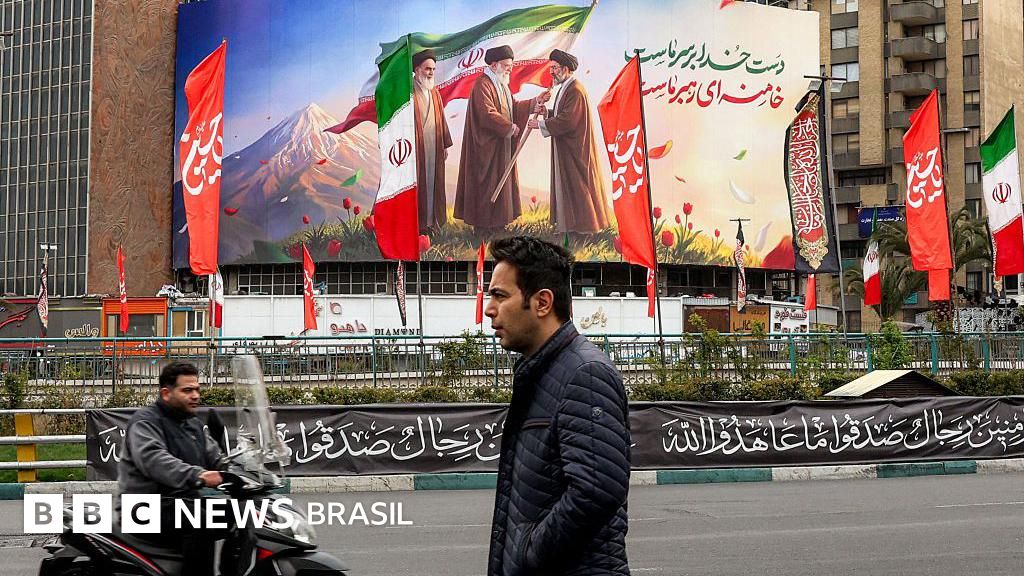
 The people of Iran are in the midst of one of the country’s biggest uprisings — and harshest government crackdowns — since the Iranian Revolution.
It started with shopkeepers in bazaars closing their doors at the end of December in protest of the plummeting Iranian rial and economic distress. But demonstrations soon spread to universities and across the country to every single province. Working-class Iranians wanted relief — both from the inflation crisis and U.S sanctions.
This week on The Intercept Briefing, host Akela Lacy speaks with Hooman Majd, an Iranian American writer and journalist, who explains what sparked the protests and the government’s brutal response.
“I don’t think in the history of Iran, even during the Islamic Revolution, have we seen this number of fatalities.” says Majd. “The death toll is staggering. Really, because that death toll is staggering, what’s happened is there are no more protests. And that’s where we are right now. No more protest, heavy security on the streets. Massive security on the streets, on every corner. It isn’t martial law. But it feels like martial law to people living there.”
The path forward is unclear, Majd says. But a few things are certain. “The idea is no to shah, no to an ayatollah, no to theocracy. Let’s just, finally, after 120 years of demonstrating — which is what the Iranians have been doing since 1906 — after 120 years of looking for democracy, can we just do that? Can we just get a democracy? That is probably the biggest sentiment in Iran: wanting a democratic rule, wanting the repression to end, wanting better relations with the rest of the world so these sanctions can be lifted.”
Some people inside and outside Iran have called on President Donald Trump to intervene. The idea that the U.S. should — or could — impose regime change militarily is folly, Majd says. “Sure, we were able to impose a regime change in Iraq militarily. They can do that again in Iran, possibly with the help of Israel or even without the help of Israel. But then what do you have? Do you have another basically authoritarian, autocratic government? That’s not what, I would argue, most people would want. And then there’s a whole other group of people in Iran, I think, who would say, ‘Anything is better than this.’”
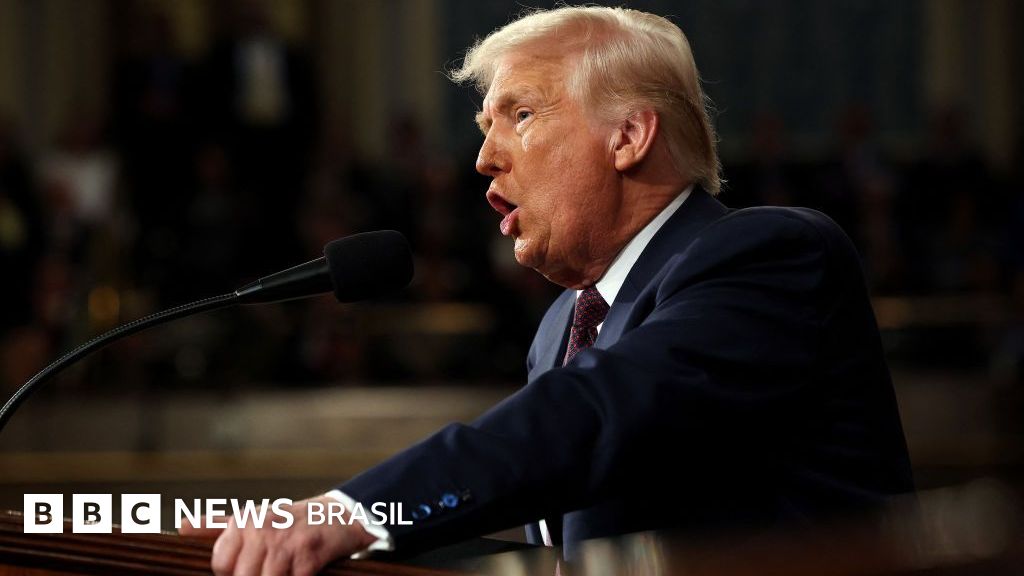
Meanwhile, Trump has threatened to intervene in another international arena. He has set his sights on taking over Greenland.
Despite walking back his statements pledging to do so by force, Trump has now said he’s forming a plan with the secretary general of NATO for Greenland’s future. We’re joined by independent investigative journalist Lois Parshley, who explains the financial interests behind Trump’s obsession with the Arctic island, the billionaires and tech moguls plotting to exploit Greenland’s natural resources, and how the people of Greenland have responded to the president’s pledge to violate their sovereignty.
Shortly before Trump first expressed an interest in Greenland during his first term, his ambassador to Denmark and Greenland visited a major rare earth mining project on the island, Parshley reported last year.
“More recently, The Guardian reported that it was Ronald Lauder, heir to the global cosmetics brand [Estée Lauder] who was also a longtime friend of Trump’s, who first suggested buying Greenland. He has acquired commercial holdings there and is also part of a consortium who want to access Ukrainian minerals. I should also say here, it’s probably important to note that blowing up NATO relationships and severing ties with longtime allies and fellow nuclear powers does not increase U.S. national security.”
Fresh off the invasion of Venezuela, the idea that Trump wants to take over Greenland is even more alarming, Parshley says.
“I’m not the first person to report on these kinds of major tech interests in things like crypto states or special economic zones. People have been pointing this stuff out for a long time, but it’s not until President Trump started saying the quiet part out loud that people have really been registering some of these absurd concepts that seem to now be creeping toward reality.”
Listen to the full conversation of The Intercept Briefing on Apple Podcasts, Spotify, or wherever you listen.
Transcript
Akela Lacy: Welcome to The Intercept Briefing, I’m Akela Lacy.
In late December, people in Iran took to the streets to protest the worsening economy as the country’s currency plunged to a record low. As protests grew, the government opened fire on civilians and implemented an internet blackout.
Leila: We tried to overcome the regime, but every night, when it got late, about midnight, they attacked with their guns and they wiped out the streets from the living people. They killed everybody, almost everybody. If you got injured and you tried to run, they kill you.
AL: We have obtained an exclusive and rare firsthand eyewitness account from one of the protesters who took to the streets of Tehran over the past few weeks. She wishes to remain anonymous, so for her safety, we’ll call her “Leila.”
Leila: I’m sorry that I’m alive. I feel guilty that I’m not dead. And the others are.
AL: It’s been difficult to confirm the current death toll, and estimates range from the low thousands to over ten thousand. Meanwhile, President Donald Trump has threatened to intervene, while Iran has blamed the U.S. and Israel for the protests.
To understand what’s happening, I’m joined by Hooman Majd, an Iranian American writer, and the author of numerous books, including most recently, “Minister Without Portfolio.” Majd has written for The Intercept, The New Yorker, The New York Times, and Foreign Affairs, among many others, and is a contributor to NBC News.
Welcome back to the show, Hooman Majd.
Hooman Majd: Thank you very much, Akela.
AL: To start, Hooman, can you give us a brief recap of what’s happening in Iran? What sparked the protest, what’s driving people to the streets, and how has the Iranian government responded?
HM: Yeah. The timeline is that the end of December, 28th or 29th, baazaris — people in the bazaar — in Tehran went basically on strike, closed their shops, and started protesting because of the incredible drop in the value of the national currency, the rial. The purchasing power of ordinary people has been decimated. And for baazaris who sell goods, often imported goods, it became an untenable situation with the currency fluctuation. So they were like, “Well, we can’t afford to sell things today at this price, because tomorrow we’re going to have to import them at a higher price.” So that was the beginning of the protest.
Other people then took up the protests, as it were, and went out and protested. Some of them were also protesting about the economy and the terrible situation, living standard, reduction in living standards. Others wanted the regime to go completely.
So it started out really as an economic protest, and other people joined in, especially young people joined in, and demanded an end to the regime altogether. And the reason they did that is because they just didn’t buy it that the regime could, that the system — if you want to call it the government — could do anything about the collapse of the economy in the way that it has been collapsing.
And they also didn’t think the government or the regime could protect them after the 12-day war in June, the decimation of — the obliteration, as Donald Trump calls it — of the nuclear program. And so they’re like, “OK, what are you guys going to do to make things better?” No sanctions relief, no negotiations with the U.S. on the immediate horizon. So people were very angry. So apart from the actual economic protest, it’s like OK, time for change. We want serious change.
The government actually responded and said, “OK, you guys are right.” Even the supreme leader responded on those initial couple of days. “You’re right, people have a right to protest. They have a right to be upset. We have to fix this.” The government said it was going to implement the equivalent of $7 [monthly] credit into everybody’s account so they could buy goods like eggs and stuff like that — but that really isn’t enough. Seven dollars in Iran basically will buy you the equivalent of a Happy Meal. They don’t have McDonald’s there, but that would be the equivalent. For a family, once a month? That’s nothing. That’s not really a solution. So the protests continued, and people weren’t satisfied. They weren’t going home.
Then former Crown Prince Reza Pahlavi in Washington — the shah’s son — became the self-appointed leader of the opposition, leader of a transition to a new Iran, and told people in Iran to go out on the streets en masse — huge numbers — and chant slogans against the government, whatever. And they did.
And whether they did it because they are big fans of Pahlavi, or because it was just an opportunity to continue the protest in the name of someone — not everybody was chanting his name, but certainly huge numbers were, and that, I think, rattled the government. That night is when they cut off the internet, to stop people from being able to communicate and continue these protests.
That’s when the government said that infiltrators came in and started shooting and killing people and killing security officials and killing police. Up until then, it had been mostly peaceful, and the police had actually not interfered in any big way. But videos emerged, even despite the internet shutdown, videos of people attacking, burning buildings, attacking policemen. There’s one horrific video of a security officer — half-naked — being beaten almost to death. And then there are also videos of security officials firing into the crowd.
There were riots, I should say. And it became a really, really scary situation for almost every Iranian, certainly the ones on the streets. But the terror that was happening on the streets, whether it was 100 percent on the side of the Iranian government shooting people and killing people, or whether it was some rioters killing some of the security people, setting fire to mosques, buses, cars, things like that.
And the crackdown continued and became even more severe. I don’t think in the history of Iran, even during the Islamic Revolution, have we seen this number of fatalities — deaths. This is where we are now. The amount of people having been killed and the number of people injured with all the videos that have emerged out of Iran through Starlink, or at various times when the internet does actually switch on for five minutes and then switches back off, is staggering. The death toll is staggering, really.
Because that death toll is staggering, what’s happened is there are no more protests. And that’s where we are right now. No more protest, heavy security on the streets. Massive security on the streets, on every corner. It isn’t martial law. But it feels like martial law to people living there.
I’ve been able to communicate with family briefly, very briefly, but I’ve been able to communicate video-wise. It certainly feels like martial law. People don’t want to go out at night. If they do venture out at night, they are told to stay off the streets by the security forces. But there isn’t really any shooting or protesting at this time.
The government is putting out that everything’s over and we’re going back to normal. I wouldn’t say it’s back to normal, go that far, but certainly there aren’t any protests at this time.
AL: A couple things you mentioned that I just want to pick up on. One, we’re talking about the death toll, and we actually were discussing this in a meeting with colleagues last week, and it was right when CBS had published the story that the death toll had risen over 12,000.
And we were discussing this along with my other colleagues, and we were like, that seems wrong. Because the numbers that had been coming out in the days prior to that were in the hundreds, or like some estimates in the low thousands, and then all of a sudden, it shot up.
But this is the result of there being an internet blackout, not being able to get accurate information out of Iran. And now it’s apparent that the death toll is well above 10,000. And so I just wonder if you could talk a little bit about the effect that this is having on how the world is interpreting these events as far as what we’re actually able to confirm.
HM: The government will eventually put out numbers — which will either be believed or not believed. And certainly, it’s been admitted, even by the supreme leader, “thousands” — that’s the word he used. He didn’t say how many thousand, but thousands.
AL: Yeah.
HM: Now, let’s remember these protests were not just in Tehran, and we’re getting most of our videos out of Tehran or Mashhad, these two big cities. But there were protests in the entire country, in almost every town, small towns. And yes, the number is horrific, but it’s not just in Tehran. They didn’t mow down 12,000 – 20,000 people just on the streets of Tehran, but they did mow down people. There’s no question there. People have been killed.
The internet shutdown is, the argument has been to prevent terrorists, as they say. The government says terrorists or infiltrators, Mossad agents, CIA agents, whatever you want to say, whatever you want to call them — and by the way, also the MEK, the other opposition group that actually is armed and does have people inside Iran — from communicating and stirring up trouble and taking over government buildings.
You actually had Reza Pahlavi telling people to go out and take over government buildings. And then he also said to Norah O’Donnell on CBS News that this is war.
Norah O’Donnell: Is it responsible to be sending citizens in Iran to their deaths? Do you bear some responsibility?
Reza Pahlavi: As I said, as I said, as I said, this is a war, and war has casualties.
In fact, in order to preserve and protect and minimize the death toll, minimize innocent victims yet again be killed by this regime, action is needed.
HM: It also seems like people inside Iran who have communicated say, “We weren’t starting a war. That wasn’t our intention, to start a war.” They certainly weren’t starting a war because they were unarmed. Why would they start a war unarmed?
But the internet shutdown is not just to stop people from communicating, which that’s one, obviously, one obvious element of it. The other element is because they’re turning it on and off right now and only in certain neighborhoods. Go from one neighborhood and it’ll be on for an hour, full 5G internet on your phone. And then it will be off. And then it’ll go to another neighborhood or another part of town, and it’ll be on and then off again.
And this is my own suspicion, is that they are trying to identify — they’re trying to monitor internet usage and find out where the organizers of any rioting and/or terrorist and/or Mossad agents are. And the way they can do that by having it come on so they communicate, because not everybody’s communicating by Starlink. There aren’t that many terminals in Iran. And they’ve been successfully jamming the Starlink communication. So occasionally it works, occasionally it doesn’t.
AL: I just want to mention for our listeners, people have been smuggling Starlink terminals into Iran in order to prop up the internet. That’s what we’re referring to. So we’re talking a little bit about Pahlavi, too. I want to play another clip from Leila, who we heard at the top, who is one of the protesters who is supportive of Pahlavi. Let’s hear her again.
Leila: We are here, and 90 percent purely looking for a better future with our king. We chant for our beloved king, Mr. Reza Pahlavi. And we chanted for our hero. He is going to do something, I know. I believe in him. And we listened to him. We listened to every order he gave.
AL: So this is one perspective from a protester who supports the son of the shah, Reza Pahlavi, and we’ve heard him a lot in recent media as you’ve mentioned.
Can you describe the complexities involved in the types of people who have been protesting, who they support? Obviously, this is not a monolith. They don’t all support Pahlavi. Can you expand on that?
HM: Yeah, I can. Well, I think I can, it’s complicated because the opposition to the Islamic regime has been there from the day the Islamic regime was created.
The initial opposition was the MEK, the Mojahedin-e Khalq, under Massoud Rajavi, who was hoping that he’d become prime minister. Khomeini and the Islamic regime set him aside. The people who had supported him, this was the MEK, the Mojahedin who had been a terror group on the American terror list because they had killed American citizens during the shah’s reign.
They fled after committing some terror acts against the Islamic regime, hoping to overthrow it and then take over. This is in 1980. They fled mostly to Iraq and then joined Saddam Hussein in the war against Iran. Which is why nowadays most Iranians, the vast majority of Iranians, do not consider them a viable opposition group, partly because they supported the enemy against their people and more than half a million Iranian boys basically died in that war.
And secondly, because they’re considered to be somewhat cultish, if not an actual cult, the way that they operate. So that’s one opposition group, and they’re still very active, and they still do have people inside Iran. They commit assassinations from time to time, so on and so forth.
Reza Pahlavi, who is the shah’s son, initially, when his father died in 1980, declared himself king in exile. And then subsequent to that, for many years, has been relatively quiet. The time that he really came out and started taking on this mantle of being a leader of an opposition was during the “Woman, Life, Freedom” movement; a little bit during the Green Movement, but not really because the Green Movement wasn’t against the regime, it was very much a civil rights movement. It was very much in favor of Mousavi who was actually part of the regime, who had, they claimed had lost the election to Ahmadinejad.
So this is going back a little bit into history in 2009, but in 2022 during the “Woman, Life, Freedom” movement, when Mahsa Amini was killed by the morality police, it was claimed that she was killed by the morality police, and there’s video to show her dying in the hospital. There was a real genuine uprising in Iran against the system that produced this kind of result: that a woman with a “bad” hijab, as it were, not quite covering all her hair, could end up dead, a young woman at that. That uprising caused people in the diaspora to believe that the regime was very weak and could be potentially overthrown. Reza Pahlavi took on the mantle of being the leader of that. And then it fizzled again his attempts to become an opposition leader, who had a viable chance — a real chance — to go back to Iran and lead a transition to a new regime, if not actual monarchy.
And then he was promoted by Israel and went to Israel in 2023, met with Netanyahu and began a campaign against, once again, against the Islamic Republic and himself as the leader of an opposition. And during this period, from 2022 to 2025, now 2026, his visibility has grown. His reputation has grown. Some people do see him as a potential liberator as it were. And during these protests, he really took on a very, very public role. Coming out, issuing videos, issuing proclamations: Go out, take out government buildings, the revolution is nigh; I’ll be there; I’m joining you soon. But he’s still in Washington and then obviously hasn’t made that move yet.
The second week of January, I believe, he was in another interview asking President Trump and/or Israel to strike, in his words, strike Iran, to finish off this regime. That has made him, among some people who are against the regime, not as popular as he could be. Siding with the enemy, Israel, which killed 1,000 Iranians in their bombing campaign in June, that’s one aspect that makes some people uncomfortable with him. There’s another aspect of just not wanting to bring back another authoritarian regime after this one.
Certainly, if not he himself, his supporters in the diaspora, at least in the West and especially in England and America, have shown themselves to be very undemocratic — attacking the Iranian Embassy in London, for example, and then injuring a bunch of policemen, attacking them physically, the police and having some of them ending up in hospital, and getting arrested. Giving speeches where, “we don’t want to talk about democracy, only the shah.” Some people saying, “Let’s make SAVAK great again” — SAVAK was the shah’s secret police that tortured people in jail.
So some of that just turns other people off. And the idea is like, no to shah, no to an ayatollah, no to a theocracy. Let’s just finally, after 120 years of demonstrating — which is what the Iranians have been doing since 1906 — after 120 years of looking for democracy, can we just do that? Can we just get a democracy?
“It’s always been for democracy, but the result has never been democracy.”
That is probably the biggest sentiment in Iran wanting a democratic rule, wanting the repression to end, wanting better relations with the rest of the world so these sanctions can be lifted. I think that’s the greater goal. I think some people will use Reza Pahlavi to try to force that to happen in a way, if not being an actual supporter. And yes, there are people like Leila, who you’ve just mentioned or just played her tape who definitely are very much in favor of him as a leader and as even an autocrat.
A famous Iranian economist, Saeed Laylaz, who’s been very critical of the regime — he lives in Iran — has said Iran’s waiting for a Bonaparte. They want a Napoleon to come in and rescue everyone and fix the system — sort of like Reza Shah, the previous shah’s father, who came in and dragged Iran into the 20th century in the 1920s, and declared himself king overthrowing, the previous very, very, very weak Qajar kings who had sold off parts of the Iranian economy to various interests — British tobacco, British petroleum, so on and so forth. And he brought that together.
And then they demonstrated again in 1953, as we know, democracy under Prime Minister Mossadegh. And then again in the revolution in 1979. It’s always been for democracy, but the result has never been democracy. So some people would recognize that. Some protesters would recognize that, oh, if Reza Pahlavi comes here, either by being helicoptered in by Israel or the United States, it’s possible. Sure. We were able to impose a regime change in Iraq militarily. The U.S. can do that again in Iran, possibly with the help of Israel or even without the help of Israel. But then what do you have? Do you have another basically authoritarian, autocratic government? That’s not what, I would argue, most people would want.
And then there’s a whole other group of people in Iran I think, who would say, “Anything is better than this. So if it means having Reza Pahlavi — great, fine. That’s better. That’s going to be better because at least the bars will be open. We’re going to have sanctions relief because he’s half American, basically. So the sanctions will be off, and the economy will improve. And who cares if he loves Israel?” So there’ll be those people, too.
AL: I just want to mention, there was a clip going around on social media of the Treasury Secretary Scott Bessent saying, openly, that the goal of these sanctions is to push the Iranian people so far that they rise up and overthrow the regime.
MH: Yeah.
Scott Bessent: I said that I believe the Iranian currency was on the verge of collapse, that if I were an Iranian citizen, I would take my money out. President Trump ordered Treasury and our OFAC division — Office of Foreign Asset Control — to put maximum pressure on Iran, and it’s worked. Because in December, their economy collapsed.
AL: I also want to talk about the geopolitics here, and then I want to go back to Pahlavi, but particularly these allegations by the Iranian government that Israel has been involved in fueling the protests. Israel has admitted to being part of this. Can you walk us through what happened there? The impact both inside and outside of Iran, and, you’ve alluded a little bit to this, but if at all how that might discredit Pahlavi in the eyes of some of his would-be supporters.
HM: He was discredited by going to Israel first, praying at the Western Wall, but not visiting a mosque, not going into the West Bank. So going to Israel, and especially with this particular government in Israel, I think did leave a bad taste in Iranian’s mouths.
And then to top it all off, when Israel attacked Iran and didn’t just attack the nuclear sites — was blowing up buildings, children were being killed in apartment buildings where they weren’t the target, admittedly, but if you were targeting a general in the IRGC in a multistory building, you’re killing a lot of innocent people. Or a scientist, I should say, for example. There’s video, which was verified, of bombs falling on a square in north Tehran, and cars being thrown into the sky. When he then refused to even condemn the attack on his own people, that also lost him some support.
And when he said, “This is [our] Berlin Wall movement” as his message to the Iranian people to rise up, it was a miscalculation because Iranians weren’t going to rise up as they were being attacked by a foreign country. They just weren’t. They were actually, I wouldn’t say they rallied around the flag, but they definitely rallied — not in support of the regime necessarily, but in support of the nation, as it were, that was being attacked by a foreign country. It doesn’t matter what the foreign country is, Iraq or Israel. So he did lose support there.
Israelis aren’t particularly interested in human rights in Iran; they don’t care about the freedom of the Iranian people. If they don’t care about the freedom of the Palestinian people, how are they going to care about the freedom of the Iranian people? It’s a very cynical view. The goal of Israel, especially the Netanyahu government, is and the Likud party is to make Iran as weak as possible so that it’s no longer a threat to them and no longer a challenge, not just as a threat, but a challenge to their hegemonic behavior in the neighborhood.
Right now, Israel has complete freedom to bomb any country in the neighborhood, and nobody can react. I think Iran is the only one that can react and has proven that it was able to react in the 12-Day War and actually got missiles through to Tel Aviv and other cities and killed innocent Israelis.
“Israel has complete freedom to bomb any country in the neighborhood, and nobody can react. I think Iran is the only one that can react.”
AL: If Pahlavi isn’t a realistic alternative, who or what do you think is the most appropriate or likely, rather, solution?
HM: The honest truth? It’s impossible to predict. What we should remember is that in these protests, which were large and very pointedly anti-regime in many cases, not in all cases, but in many cases, the security forces — the IRGC, the Revolutionary Guards, the actual army itself, which are made up mostly of conscripts — none of them fractured. There were no defections. There was no sense that any of the security officials were going to not follow the orders and do the crackdown and bring about order. Not one that we know of, at least not one serious one.
There may have been occasional cops or Basij or even IRGC members, younger ones, who wouldn’t fire on anyone but would just patrol. But they didn’t come out and say, we’re defecting to the side of the opposition.
And the other thing to remember is that Pahlavi, back in 2025, after the 12-Day War in June, set up a system where people could defect anonymously through a web portal. And he claimed at one point, within a month, that he had 50,000 armed people from the armed forces in Iran, various armed forces, ready to defect at the right time. If there was a right time, this was the right time. Not only did not 50,000 defect to his side, but not even one came out, or at least publicly, and defect to his side. So that’s not happening in terms of the regime crumbling, cracking in that way with the security services so far. That’s not happened.
So in terms of what is in the future, I think in the immediate future, the regime survives. And people are terrified. They’re shocked, they’re in trauma. People in Iran, I’d say even people outside Iran who have family in Iran, are shocked and traumatized. Not being able to reach our families is tough.
I think that for the immediate future — short of an interference or intervention by Donald Trump or Israel — I think the regime survives in the short term. In the long term, we have to remember that the supreme leader is going to be 87 years old this year, I think, and he’s had cancer, probably not in the best of health. So far, people have remained loyal to him. Whether that continues over the longer term is questionable. Whether Trump decides to pull a Venezuela and then decide that he can work with, or the U.S. can work with, one of the Revolutionary Guards generals, or the president of Iran, or the secretary of the Supreme National Security Council is very powerful, Ali Larijani — who knows?
Who knows what options, because it was just announced, I think, this last week that options are being presented to Trump by the military, by the, I assume, the intelligence agency, as to what options he has vis-à-vis Iran, in terms of what kind of blow he can do on Iran, or what kind of attack/strike was it were he could make on Iran, or what kind of blow it could be to the regime.
It does seem that he wants to do something to Iran because he said he was going to. It’ll be far, far too late to help the protesters, which he initially claimed he was doing.
AL: Right.
MH: And now the argument is that [Trump says,] well, I saved 837 people from being executed. So that’s how I helped the protesters. Which may or may not be true, but it’s irrelevant. He hasn’t refuted that he believes it’s time for new leadership in Iran. Now what that leadership is, he certainly hasn’t met with the shah’s son, Reza Pahlavi, and hasn’t indicated that he believes he’s a viable option. So we don’t know.
Again, prediction is impossible, but there are various scenarios. It’s not what I would want to happen. I’m living in America. I don’t have a right to say what I would — I would like Iranians to be happy. I would like Iranians to have the government that they want. I would like Iranians to have democratic rule. I would like Iranians inside Iran to have an economy that works for them and have jobs and be able to spend money and have disposable income and travel. All the things that we take for granted in the West, I would want my fellow Iranians inside Iran to have. How they bring that about, it’s not my place to make the prescription.
AL: You mentioned the 837 people, you’re referring to the protesters that Iran has backed off from hanging now, as a result, ostensibly, of Trump’s comments.
HM: Yes.
AL: I want to turn back to this question of a targeted strike from the United States. We have another clip from Leila.
Leila: We are hopeful that Mr. Trump can help us because as long as we are not armed, we are only a bunch of meat in front of the bullets.
AL: What do you make of this kind of sentiment, asking Trump for help? And the idea of a targeted strike, what would that actually do? Does anyone think that striking a government from afar will remove that government? What are you hearing?
HM: I mean, certainly people like Leila, who you just played the tape of, certainly she’s not armed and I think most of the young people are not armed. But there have been armed people in Iran in these protests. We have verified videos of armed people, especially in Kurdish areas, in Baluchestan and in certain parts of the country, there have been armed clashes.
It is hard to get guns in Iran. It’s not a gun-friendly country. I think people are desperate, and I think a lot of the protesters who either witnessed some killings or mass killings probably feel that there has to be some kind of strike to stop the government from behaving the way it does and or to potentially bring about regime change.
Now, striking the leadership, for example, if President Trump decides to do that — it’s very unlikely to bring about regime change because what’s behind that strike? We saw that in Venezuela. He wasn’t going to helicopter [María Corina] Machado into Caracas because he had no idea if the military would support her. You just don’t have any idea, and you don’t want a war.
Again, going back to 2003, George Bush did want a war. He was happy to have a war. But we know what that was. And as we know, Trump has, on his own personal level, always been against those kinds of foreign interventions. He likes the one-and-dones, as it were, one and done, I’m in and out. Same thing with Iran in June, when he in a space of a couple of hours, he, as he says, obliterated the Iranian nuclear program without killing anybody on the ground, without any American servicemen losing their lives. What appears to be his notion of doing something of striking Iran or some kind of strike on Iran would be to take out some of the top leaders but leave the regime in place and hope that someone powerful takes over, whether it’s, as I pointed out, Ali Larijani or Mohammad Bagher, who’s the speaker of Parliament. These are former IRGC generals who are in politics now. That’s a possibility. I don’t know if that’s something that he’s considering.
But regime change in a big way means what? The only way that can be accomplished by force is to land American troops. And go to war with basically the people who are going to fight to the death.
We have to remember that Iran isn’t a situation where 99 percent of the people are against the regime. Even if the regime only has 10 to 20 million supporters out of 90 million people — I’m not going to count the children, obviously — but it has shown to have had more than 10 million supporters.
In the last presidential election where the reform president won, Pezeshkian won, 13 million people voted for Saeed Jalili, who’s probably the most hard line of the hard-liners, who has zero relations with the West, an absolute hard line. His Ph.D. thesis was the foreign policy of the prophet. This is how deeply, Islamically theological he is. And he got 13 million votes. The fact that he lost but with 13 million votes should indicate something. Let’s say even the 13 million was exaggerated, 10 million people, and they’re the ones with guns and they’re not going anywhere. And they have no escape to go anywhere.
“There aren’t a lot of places they can go, if there is a regime change. So they’re going to fight.”
Right now, people like Reza Pahlavi, or at least his people, not himself directly, are claiming that they will seek revenge for these people who have blood on their hands. And they’re going to basically do what the Islamic regime did to the shah’s closest allies and execute them the first day they take over. These people, they don’t have an escape route. Most of them, the vast majority of them, don’t have big bank accounts overseas that they can access. Most of them don’t have family overseas or places they can escape to. If you thought at one point that if there’s a revolution and these, the ones who are the diehard religious, diehard theocratic supporters, theocracy supporters would go to Damascus, that’s no longer possible. If you thought they would go to Beirut, that’s not possible. If you thought they’d go to Caracas, that’s not possible anymore. There aren’t a lot of places they can go, if there is a regime change. So they’re going to fight. If there’s a war, they’re going to fight. They’re going to fight.
One of the potential problems with regime change attempts, at least by outsiders, is that we end up in a civil war like Syria. Because if there’s a decapitation at the top of the leadership, then there are Kurdish armed groups who are separatists. You’ve got Azeri separatists, you’ve got Baloch separatists down in the Southeast, you’ve got the Arab separatist in the Southwest — many of them armed, separatist groups, I mean — who could break up the country. You could have a civil war going on.
The MEK is not going to stand by and allow Reza Pahlavi to take over. Reza Pahlavi supporters aren’t going to allow the MEK to take over. So you’re going to see those clashes. So it could be very, very messy. And I have to believe that the U.S. intelligence community is laying all this out for President Trump as he makes a decision. In fact, I’m sure they are. It would be crazy, and I’m sure the Mossad has been laying it out for Benjamin Netanyahu as well.
AL: I do want to ask one more question about the weakening of Iran’s regional allies in recent months: Syria, Hezbollah, and Hamas. How has that affected the regime’s power and stability?
HM: No question it’s affected its power. It’s power projection, for sure. In terms of stability, yes, it’s one of the complaints of people who protest against the regime — that we spent all this money, all this effort to become this power in the region, and it’s all gone in the space of two years. We spent all this money which we could have spent inside Iran on people. Billions and billions of dollars on Hezbollah decimated, if not, it’s not gone completely, but still, the leadership is decimated. The power of Hezbollah has been weakened to the point where they’re not a threat to anybody really anymore, or certainly not to Israel in any significant way. Hamas decimated, certainly not a threat anymore to Israel.
Caracas is problematic only because that was their springboard to this continent, the South American continent. And so that’s no longer good. Syria, of course, not a threat to anyone. And the hundreds of billions of dollars spent keeping [Bashar al] Assad in power. So when you look at that and you look at Iranians saying, what about us? These are all countries that supposedly were going to end up being our protector in a way, so that if we were attacked, they would be on the forefront of attacking our attacker. And that didn’t happen. What was all that money spent for?
The one thing it does have are ballistic missiles and the capability to produce ballistic missiles accurately — accurate ballistic missiles, I should say. And it does have drone technology that even the U.S. is reverse-engineered and is starting to use suicide drones that Iranians invented and can produce in huge numbers, which they also then sold the technology to the Russians, who now make them domestically in Russia.
But weakened? Yeah, it’s been significantly. There was always this sense that Iran had surrounded itself with these, if you want to call them proxies, they weren’t exactly proxies because they weren’t doing everything that Iran wanted. At one point Hamas, they were actually against Hamas because Hamas was for the rebels in Syria, and Iran was killing the rebels in Syria. So they had Hamas, they had the Iraqi Shia groups in Iraq right across the border. They had, as you pointed out, they had Islamic Jihad, they had Hezbollah, they had Damascus. So all that power is now basically gone, and it’s now down to just Iran really.
And the Houthis are still, yes, allies, if not proxies, and can cause some damage if Donald Trump decides to take out the supreme leader and kill him — the Houthis would react very negatively to that. The Shias in Yemen would react very negatively to that. And in fact, it’s quite possible that Shias in other parts of the Middle East, such as in Iraq and in Bahrain and places like that, even in Saudi Arabia, there might be some unrest for taking out an ayatollah at the end of the day, whether you like him or dislike him. For a lot of Shia faithful, he’s an ayatollah. It’s like, do you take out a cardinal that you don’t like in the Catholic church? I’m sure that the Pope would have an issue with that.
AL: Thank you so much, Hooman, for this conversation and for your insights. We’re going to leave it there.
HM: My pleasure, Akela. Thank you.
[Break]
AL: In other news, President Donald Trump is making good on his threats to — for some reason — try to take over Greenland. And his efforts reached new levels of absurdity when the self-proclaimed “president of peace” texted Norway’s prime minister “Considering your Country decided not to give me the Nobel Peace Prize for having stopped 8 Wars PLUS, I no longer feel an obligation to think purely of Peace.” Setting aside the highly questionable “8 wars” claim — Trump went on to say, “The World is not secure unless we have Complete and Total Control of Greenland.”
So why is Trump so obsessed with Greenland? Joining us to explain what’s behind Trump’s attempted land grab is investigative journalist Lois Parshley.
Welcome to the show, Lois.
Lois Parshley: Thank you for having me.
AL: So Trump has repeatedly claimed an interest in taking over Greenland, though on Wednesday he walked back his comments about doing so by force. He’s been claiming that this is in the national security interest of the U.S., notwithstanding the blatant violations of sovereignty here fresh off the U.S. invasion of Venezuela. What is Trump actually interested in?
LP: That is a great question and one that I started to ask last year. As Trump took office, I thought it was really important to understand who is benefiting from his policy decisions.
So I started asking questions about the wealthy donors in his orbit and their personal financial interests. We still likely don’t have the full picture, but last January I found that shortly before Trump first expressed an interest in Greenland during his first administration, so back in 2019, his ambassador to Denmark and Greenland visited a major rare earth mining project on the island.
Now, more recently, The Guardian reported that it was Ronald Lauder, heir to the global cosmetics brand [Estée Lauder], who was also a longtime friend of Trump’s, who first suggested buying Greenland. He has acquired commercial holdings there and is also part of a consortium who want to access Ukrainian minerals. I should also say here, it’s probably important to note that blowing up NATO relationships, and severing ties with longtime allies and fellow nuclear powers does not increase U.S. national security.
AL: As you mentioned, Trump started talking about this after Ronald Lauder first brought up the idea, and last year you wrote about the tech moguls who’ve also taken an interest in Greenland. Can you tell us more about the specific interests that they have in the island and the resources that are at stake?
“They are aiming to mine in western Greenland for minerals crucial to the artificial intelligence boom and used in data centers.”
LP: Many of the tech moguls who are sitting in the front row of Trump’s inauguration, people like Mark Zuckerberg and Jeff Bezos, are investors in a startup called KoBold Metals. They are aiming to mine in western Greenland for minerals crucial to the artificial intelligence boom and used in data centers. Opposition to some of this mining actually ushered a new party into power in Greenland in 2021. They slowed some of the rare earth minerals development that was currently in explorations phases and banned all future oil development. But just two weeks before Trump came into office – so in 2025 — KoBold medals raised $537 million in a funding round, bringing its valuation to almost $3 billion. So we’re talking about a lot of money here.
AL: What does it say that these elite financial interests are so explicitly driving the U.S. to pursue this really anachronistic imperialism?
LP: That is a great question. How anachronistic that actually is, is another one? But I would say that overall —
AL: Fair enough.
LP: One of the things that just seems abundantly true here is that I’m not the first person to report on these kinds of major tech interests in things like crypto states or special economic zones. People have been pointing this stuff out for a long time, but it’s not until President Trump started saying the quiet part out loud that people have really been registering some of these absurd concepts that seem to now be creeping toward reality.
AL: I want to talk a little bit about Marc Andreessen, who has also taken a particular interest in the island. What can you tell us about his investments targeting Greenland?
LP: So among the contributors to KoBold’s funding is a leading venture capital firm, founded by Marc Andreessen, who has also helped shape the administration’s technology policies. A general partner at his venture capital firm was also listed as a KoBold director at one point on a company SEC filing.
Andreessen has been funding startups hoping to build experimental enclaves around the world. These are sometimes called network states. And sometimes they’re called crypto states, sometimes they’re called special economic zones.
Often they involve the promise of freedom from the constraints of government. And proposals for these libertarian freeholds have sprung up in Honduras, Nigeria, the Marshall Islands, Panama — which by the way, Trump also proposed taking over by military force.
AL: Lest we forget.
LP: And while it looks a little different in each location, the sales pitch usually includes replacing taxes and regulations with things like cryptocurrency and blockchain to enable things like biomedical experiments on human subjects.
Trump also recently issued a full and unconditional pardon for former Honduran President Juan Orlando Hernández, who had been serving a 45 year prison sentence in the U.S. for drug trafficking and weapons conspiracy charges. During his time in office, Hernández and his administration consistently backed the legal framework that enabled Honduras’s special economic zone called Próspera, which was also funded by Andreessen, including submitting legislation to grant them tax exemptions and regulatory privileges. So this is not just an issue around Greenland.
AL: Greenland was ruled by Denmark from 1721 to 1979, but Denmark continued to control its foreign policy and defense after that. In 2008, Greenlanders voted for greater independence. You write, “The president’s renewed intention to take over Greenland has reignited debates over its sovereignty, as the country grapples with the trade-offs between economic opportunity and independence from Denmark. As the country’s glaciers recede, it’s also facing sweeping climate-driven transformations, threatening traditional industries like fishing and hunting and exposing valuable mineral resources.”
Can you tell us a little bit more about this tension? I’m really curious also about the movements that you alluded to earlier within Greenland to slow this development.
LP: The fight over Greenland’s resources has extended for centuries. As you noted, Greenlanders voted for greater independence in 2008, taking control of their natural resources along with other state functions.
There are abundant oil reserves around Greenland, but producing oil in those conditions has been historically very difficult and expensive. There are high transportation costs and infrastructure limitations, and how much to develop its abundant natural resources has been a debate within Greenland. Some of their politicians have supported development, particularly as a means to fund greater autonomy from Denmark.
Siumut, a pro-independence political party who was in power in the early aughts, declared that mineral extraction could help the country transition away from Denmark because it would need to find new sources of income. However, many residents still rely on traditional ways of life, including fishing, hunting for food security, living closely on the land. And development would impact all of those things, which are also under pressure from rapidly changing climate conditions, including warming temperatures and extreme weather.
AL: In response to Trump’s threats, Greenland has also seen some of its biggest protests in history. Can you tell us more about how the people of Greenland, the Greenlandic Inuit, have been responding to this tension and now the Trump administration’s aggressive efforts?
LP: I certainly don’t want to speak for any Greenland residents. I’m not a resident, but from the people I spoke to a year ago, the general vibe seemed to be more bemusement. Obviously, as tensions have escalated since then, it seems like far less of a joke today.
All of this unwelcome attention has succeeded in delivering one change. Some of the residents I spoke to said the country is now more unified and wanting to find a path to independence from Denmark, although it is challenging to figure out a way to do so. He told me, “You can’t put a name on land. Land belongs to the people.” It’s not something they feel like can be sold.
Frankly, I think a lot of the news conversation around “Can Donald Trump buy Greenland?” overlooks the fact that no one in Greenland is interested in selling. More bluntly, as a Danish politician said, at one European Parliament meeting last week, “Let me put this in words you might understand: Mr. President, fuck off.”
But as you noted, at Davos President Trump reiterated that he wants to acquire Greenland, but said, “I don’t have to use force. I don’t want to use force. I won’t use force.” Certainly our allies hope that that is true.
AL: We’re going to leave it there. Thank you so much, Lois, for joining us on The Intercept Briefing.
LP: Thank you for having me.
AL: On Wednesday at Davos as Trump rambled on about why he believes the U.S. is entitled to take Greenland, he repeatedly confused the island for Iceland. He would then later announce that he had a productive meeting with the secretary general of NATO, and they reached a “framework” of a deal over Greenland’s future.
That does it for this episode of The Intercept Briefing.
This episode was produced by Laura Flynn and Desiree Addib, who is also our booking producer. Sumi Aggarwal is our executive producer. Ben Muessig is our editor-in-chief. Maia Hibbett is our managing editor. Chelsey B. Coombs is our social and video producer. Fei Liu is our product and design manager. Nara Shin is our copy editor. Will Stanton mixed our show. Legal review by David Bralow.
Slip Stream provided our theme music.
You can support our work at theintercept.com/join. Your donation, no matter the amount, makes a real difference. If you haven’t already, please subscribe to The Intercept Briefing wherever you listen to podcasts. And tell all of your friends about us. Better yet, leave us a rating or a review to help other listeners find us.
Until next time, I’m Akela Lacy.
Thanks for listening.



:strip_icc()/i.s3.glbimg.com/v1/AUTH_59edd422c0c84a879bd37670ae4f538a/internal_photos/bs/2023/l/g/UvNZinRh2puy1SCdeg8w/cb1b14f2-970b-4f5c-a175-75a6c34ef729.jpg)


:strip_icc()/i.s3.glbimg.com/v1/AUTH_08fbf48bc0524877943fe86e43087e7a/internal_photos/bs/2024/o/u/v2hqAIQhAxupABJOskKg/1-captura-de-tela-2024-07-19-185812-39009722.png)


Comentários
Aproveite ao máximo as notícias fazendo login
Entrar Registro